Loading…
ACTE Postsecondary CTE Summit 2026
Venue: Lincoln clear filter
Thursday, September 17
 

9:30am EDT

Stacked Credentials, Scalable Impact: Aligning Allied Health Pathways with Policy, Funding, and Workforce Demand
Thursday September 17, 2026 9:30am - 10:15am EDT
As federal and state policies increasingly prioritize short-term credentials, workforce alignment, and measurable outcomes, postsecondary CTE programs are being asked to do more than deliver content—they are being asked to design systems that sustain learner success, institutional effectiveness, and workforce readiness. This session explores how multi‑competency and stacked credential models can serve as a practical bridge between policy intent and instructional practice in allied health education.
 
 Grounded in validated job-task analyses and industry-recognized credentials, the session examines how multi‑competency pathway design aligns with evolving federal and state funding strategies, including Workforce Pell, outcomes-based funding models, and accreditation accountability frameworks. Participants will explore how intentionally stacked credentials support program sustainability, enable braided funding approaches, and strengthen alignment across education, workforce, and employer systems—without fragmenting the learner experience.
 
 Through real-world examples from allied health programs, this session highlights how policy-informed, evidence-based pathway design can improve retention, completion, certification outcomes, and placement, while providing learners with earlier milestones of value and greater career mobility. Attendees will leave with a clearer understanding of how aligning policy, funding, and system-level expectations can transform multi‑competency pathways from instructional innovations into scalable, sustainable CTE strategies that connect education to workforce and economic development goals.
Speakers
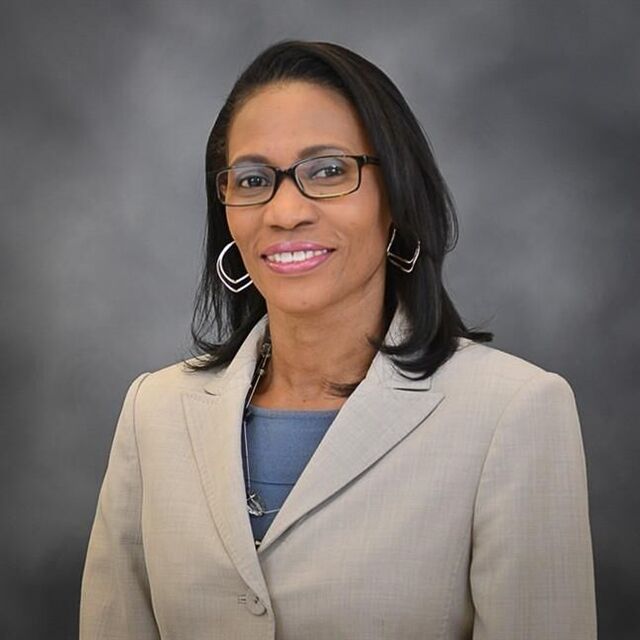
avatar for Tywana

Tywana "Ty" Lawson, PhD, RN

Integration Specialist, National HealthCareer Association (NHA)
Tywana “Ty” Lawson, PhD, RN is an Integration Specialist and Health Sciences Educator with the National Healthcareer Association (NHA), where she partners with allied health programs to support curriculum alignment, instructional design, and effective implementation of industry‑recognized... Read More →
Thursday September 17, 2026 9:30am - 10:15am EDT
Lincoln Hyatt Regency | 2799 Richmond Hwy, Arlington, VA

10:30am EDT

The School-to-Employment Pipeline is no longer working as originally designed. The Fix is easier (and a lot more fun) than you might imagine.
Thursday September 17, 2026 10:30am - 11:15am EDT
**Preface** Please know that this is just one example of a conversation thread that we believe could be relevant to your audiences. If the notion of behavioral assessment as a tool for aligning people with academic and employment pathways intrigues you and you’d prefer a different slant, we are happy to work with you to refine/refocus the idea. We would also seek to bring in other partners as co-presenters who can illustrate their stories and outcomes… whom we invite to join the conversation will depend a little on your preferred focus/direction.
 
Unacceptably high stop-out rates. Declining enrolment. Growing cynicism in the ROI of post-secondary education. Increasing accountability for higher completion rates and stronger employment outcomes… the pressures on the educational system are immense. Employers and jobseekers are equally dissatisfied with the current state.


Attacking the symptoms as we have done, has not improved outcomes. What if, in our quest to address the cracks in the system, we’ve overlooked the root of the issue? 


We will present live case studies and projects drawn from different industries and stakeholders in the employment ecosystem, including employers, industry associations and educational institutions. These examples will illustrate how rethinking the fundamentals of how and where we connect with young people, how we package the message, and how we position the opportunity can lead to astonishing outcomes. 


The common thread in those examples uncovers a paradox: The ‘fix’ for these gnarly systemic issues doesn’t lie in trying to address those issues directly; instead, it lies in shifting our focus to the individuals we serve and leaning into the leading indicators of strengths, aptitude and potential that fuel not only stronger outcomes for the individual, but also higher completion rates and better employment outcomes.


Taking an intensely person-centric approach creates a shared language, builds trust and engagement, surfaces surprising options for consideration, connects workforce development to economic development seamlessly, and has built thriving talent pipelines for employers where previously there was scarcity.
Speakers
avatar for Jan G. van der Hoop

Jan G. van der Hoop

President, Fit First Technologies International, Inc.
Jan is the Founder and President of Fit First Technologies. In many respects, he has always been a bit of an oddball. He started his Corporate career in Operations and ‘accidentally’ spent 15 years in senior HR roles at PepsiCo, Hilton and Office Depot. He has been instrumental... Read More →
Thursday September 17, 2026 10:30am - 11:15am EDT
Lincoln Hyatt Regency | 2799 Richmond Hwy, Arlington, VA

1:15pm EDT

Meeting Students Where They Are: Outreach Strategies That Strengthen Rural Cybersecurity Pathways
Thursday September 17, 2026 1:15pm - 2:00pm EDT
Effective secondary-to-post-secondary transitions are built through intentional outreach that helps students recognize educational pathways, build confidence, and envision themselves as future college students before enrollment decisions are made. This session highlights how Marion Technical College (MTC) strengthens rural cybersecurity pathways through targeted outreach strategies developed as part of its National Science Foundation - Advanced Technical Education (NSF-ATE) funded project, Expanding Cybersecurity Education at a Rural Community College (#2350280).
 
Rural Ohio students frequently enter post-secondary education at a disadvantage due to socioeconomic barriers and inequities in school funding systems that limit access to high-quality career and technical education. In response, MTC partners with secondary schools, school districts, and community organizations to deliver hands-on cybersecurity experiences that make post-secondary pathways visible, relevant, and attainable.
 
A cornerstone of this outreach is the College’s Mobile Training Lab—a 40‑foot, self-contained, handicap-accessible mobile classroom equipped to deliver college-level cybersecurity activities at high schools and rural community sites. Bringing the lab directly to students reduces geographic and financial barriers while allowing them to experience high-quality instruction, advanced technology, and post-secondary expectations in familiar settings. This approach is particularly impactful for first-generation students, who are often unaware of cybersecurity and other emerging career fields due to limited local exposure.
 
The session also highlights summer cybersecurity camps, which provide immersive, short-term experiences designed to increase career awareness and student interest, particularly among rural learners. In addition, structured campus visit days strengthen transitions by intentionally connecting outreach to enrollment through lab experiences, faculty interaction, and clear explanations of stackable credentials and cybersecurity career pathways.
 
Evaluation findings demonstrate how mobile outreach, summer camps, and campus visit days function together to increase student awareness, confidence, and enrollment. Collectively, these strategies illustrate what successful secondary-to-post-secondary transitions can look like in rural communities and offer a replicable model for institutions seeking to expand equitable access to cybersecurity education.
 
This session will benefit community college faculty, administrators, outreach and recruitment staff, grant managers, and secondary education partners seeking effective strategies to strengthen rural career and technical education pathways. Participants will gain practical insights into mobile outreach, summer camps, and structured campus visits that can be adapted to their own institutions and communities. The session will include guided discussion, examples of outreach activities delivered through the Mobile Training Lab, and a review of evaluation findings to support institutional decision-making. Attendees will receive a slide deck and sample outreach planning resources that illustrate how these strategies can be implemented or scaled within their own programs.
Speakers
avatar for Christy Culver

Christy Culver

Professor/Assistant Program Administrator, Business and Information Technologies, Marion Technical College
Over the past 35 years, Christy Culver’s class arrangements have included on-site, off-site, and since 1998 online. She has received the Marion Technical College (MTC) Strategic Teaching & Learning Challenge Award and was named the Ohio Association of Two-Year Colleges Teacher of... Read More →
avatar for Tola Francis-Sanusi

Tola Francis-Sanusi

CPSN Regional Coordinator, Marion Technical College
Tola Francis‑Sanusi is a career technical education leader with over 13 years of experience supporting students, educators, and institutions across Ohio's secondary and postsecondary systems. She currently serves as the Career Pathway Support Networks (CPSN) Regional Coordinator... Read More →

avatar for Joel Ks Ku

Joel Ks Ku

Associate Professor, Information Technology, Marion Technical College
Joel Ks Ku has been teaching computer courses since 2004 when he graduated with a Master's in Applied Computing with a concentration in Software Engineering.  He had several working experiences including IT support department from local schools and a printer manufacturing company... Read More →
Thursday September 17, 2026 1:15pm - 2:00pm EDT
Lincoln Hyatt Regency | 2799 Richmond Hwy, Arlington, VA

2:15pm EDT

Selling the Strategy: How to Position CTE Initiatives for Executive and Donor Support
Thursday September 17, 2026 2:15pm - 3:00pm EDT
Strong CTE ideas do not fail because they lack merit; they fail because they are not positioned to align with institutional priorities, leadership decision-making, or funding realities. This interactive session focuses on how to effectively “sell” a strategy by understanding stakeholder perspectives and translating ideas into priorities that resonate with senior leaders, boards, and donors.


Participants will be introduced to a practical framework for analyzing stakeholder narratives across institutional and workforce contexts, including presidents, CFOs, faculty, and employer partners. Using a structured Narrative Landscape Analysis, attendees will identify how key stakeholders think about issues such as workforce alignment, funding, rigor, and student success, and learn how to reframe their ideas to better align with those perspectives.


Designed for administrators, faculty leaders, and staff responsible for advancing initiatives, this session emphasizes application over theory. Participants will engage in guided reflection, small-group discussion, and a hands-on activity using a provided worksheet to map a real initiative from their institution. By the end of the session, attendees will develop a concise 2–3-sentence strategic pitch aligned with stakeholder priorities.


Attendees will receive a practical toolkit that includes the Narrative Landscape Analysis worksheet, a strategic messaging template, and access to the session slide deck. These resources are designed to be immediately usable and to support continued conversations with leadership and partners after the conference.


By focusing on alignment rather than persuasion, this session equips participants with the tools to move their ideas from concept to institutional priority.
Speakers
avatar for John Vasquez

John Vasquez

Assistant Vice Provost & Senior Director of the Comprehensive Studies Program, University of Michigan
Dr. John Vasquez serves as Assistant Vice Provost for Student Success and Senior Director of the Comprehensive Studies Program at the University of Michigan–Ann Arbor. With over two decades of experience across community colleges, Hispanic-Serving Institutions, and regional comprehensive... Read More →
Thursday September 17, 2026 2:15pm - 3:00pm EDT
Lincoln Hyatt Regency | 2799 Richmond Hwy, Arlington, VA

3:30pm EDT

Starting Earlier in the Trades, Early Results and Best Practices from North Carolina’s 9th–10th Grade CTE Dual Enrollment Pilot
Thursday September 17, 2026 3:30pm - 4:15pm EDT
This session shares early results and practical lessons from North Carolina’s 9th grade CTE dual enrollment pilot, with a focus on McDowell Technical Community College’s implementation model in partnership with McDowell High School. The presentation highlights how MTCC expanded access to college level CTE coursework by leveraging credentialed high school CTE faculty who are approved to serve as adjunct instructors for the college. Attendees will hear what worked, what required mid course corrections, and what it takes to run a model that is instructionally strong, operationally clean, and built to scale as statewide policy moves toward formalization.


This session will benefit community college academic affairs leaders, CTE deans and directors, dual enrollment and CCP staff, high school CTE administrators, registrars, advising teams, and anyone exploring participation in the pilot or preparing for broader expansion of 9th and 10th grade eligibility. It is also useful for institutions that want to strengthen high school to college instructional alignment, improve partnership workflows, and create earlier on ramps into high demand CTE pathways.


Attendees will leave with clear takeaways they can apply immediately, including a start to finish implementation blueprint that covers partnership planning, faculty credentialing and onboarding, course and curriculum alignment, scheduling and registration processes, student eligibility and advising supports, communication routines, and data tracking for performance reporting. The session will walk through common decision points and pitfalls, and offer practical strategies for maintaining quality control and consistency when instruction is delivered by high school faculty under a college adjunct model.


The session is designed to be interactive. Participants will work through a guided readiness check activity to assess their own local capacity, then engage in short table discussions around staffing, compliance, scheduling, and student support scenarios. A brief planning exercise will help attendees identify their next three actions, key stakeholders to involve, and the data elements they should be capturing now to support internal decision making and future policy reporting.


Deliverables will include a slide deck, a one page implementation checklist, a partnership workflow map that outlines roles and handoffs between the college and high school, a sample instructor onboarding and quality assurance outline, and a simple data tracking template that identifies early performance indicators colleges can use for local reporting and continuous improvement.
Speakers
avatar for Brandon Hensley PhD

Brandon Hensley PhD

Dean of Career and Technical Education, McDowell Technical Community College
Dr. Brandon Hensley is the Dean of Career and Technical Education at McDowell Technical Community College and a graduate of Old Dominion University, where he received his Ph.D. in Workforce and Organizational Development. With over two decades of experience spanning engineering, faculty... Read More →
Thursday September 17, 2026 3:30pm - 4:15pm EDT
Lincoln Hyatt Regency | 2799 Richmond Hwy, Arlington, VA

4:30pm EDT

Andragogy in Action: Supporting Transition to Postsecondary Education and the Workforce
Thursday September 17, 2026 4:30pm - 5:15pm EDT
The workforce needs individuals with some level of training. Community colleges provide access to support adult learners in meeting their academic and career goals (May-Varas, 2015, p. 81). Adult learners bring numerous experiences to the learning environment. These lived experiences support adult learners in accessing coursework and developing a deeper understanding of course content. 


In this presentation, adult educators will be able to identify adult learners’ experiences, develop a lesson, and integrate the lesson into their course to support learner success and transition. During this session, participants will engage in discussions and collaborate to develop lessons. Participants will be provided a copy of the presentation, sample lessons, and a lesson template.  
Speakers
SM

Sam May-Varas

Professor, Clark College
Dr. Sam May-Varas is a Basic Education faculty at Clark College in Vancouver, WA. His instruction is focused on supporting adult learners returning to earn their high school diploma or GED. Dr. May-Varas designs his courses to connect adult learners to lived experiences to support... Read More →
Thursday September 17, 2026 4:30pm - 5:15pm EDT
Lincoln Hyatt Regency | 2799 Richmond Hwy, Arlington, VA

 
Share Modal

Share this link via

Or copy link

Filter sessions
Apply filters to sessions.